
Blog
14KT vs 18KT Gold for Engagement Rings: Which Gold Should You Choose?

Choosing an engagement ring is one of the most meaningful purchases you’ll ever make. While most buyers spend weeks comparing diamond shapes, carat weights, and ring settings, many overlook one decision that significantly impacts the ring’s durability, appearance, maintenance, and price-the choice between 14KT vs 18KT Gold for Engagement Rings.
So, which gold is better?
The answer isn’t as simple as saying one is superior to the other. Both 14KT and 18KT gold are genuine, BIS-hallmarked precious metals that are widely used in fine jewellery. The right choice depends on how often you plan to wear the ring, your lifestyle, your budget, and the look you want to achieve.
If you’re buying a ring for everyday wear, durability may be your top priority. If you’re looking for a luxurious heirloom piece with a richer gold colour, higher gold purity might matter more. Understanding these differences before making a purchase can help you invest in a ring that remains beautiful for decades.
In this guide, we’ll explain everything you need to know about 14KT vs 18KT Gold for Engagement Rings, including durability, colour, price, purity, maintenance, skin sensitivity, and which option is better suited for different lifestyles. Whether you’re purchasing a natural or lab-grown diamond engagement ring, this guide will help you make a confident and informed decision.
What Is the Difference Between 14KT and 18KT Gold?
Before comparing durability and price, it’s important to understand what gold purity actually means.
Gold jewellery isn’t made from pure gold alone. Pure gold (24KT) is naturally soft and can bend, scratch, or lose its shape with everyday use. To make it strong enough for jewellery, jewellers mix pure gold with carefully selected alloy metals such as silver, copper, zinc, or palladium.
The amount of pure gold in the alloy determines the karat.
|
Gold Purity |
Pure Gold Content |
Alloy Content |
BIS Hallmark |
|
24KT |
99.9% |
0.1% |
BIS 999 |
|
22KT |
91.6% |
8.4% |
BIS 916 |
|
18KT |
75% |
25% |
BIS 750 |
|
14KT |
58.3% |
41.7% |
BIS 585 |
Both 14KT and 18KT are considered premium choices for diamond jewellery because they offer an ideal balance of beauty and structural strength. Unlike 22KT gold, which is commonly used for traditional Indian jewellery, 14KT and 18KT are strong enough to hold diamonds and gemstones.
Simply put:
- 18KT gold contains more pure gold, giving it a richer colour and higher intrinsic gold value.
- 14KT gold contains more strengthening alloys, making it harder and better suited for everyday wear.
Neither option is “fake” or inferior. Both are genuine gold, and certified under India’s BIS hallmarking system.
Why Isn’t 24KT Gold Used for Engagement Rings?
This is one of the most common questions jewellery buyers ask.
While 24KT gold is the purest form of gold available, it is simply too soft for engagement rings. Rings are exposed to constant contact with hard surfaces-typing, lifting objects, cooking, driving, travelling, and everyday activities. A soft metal can bend over time, and the prongs holding the diamond may become less secure.
That’s why experienced jewellers around the world recommend stronger gold alloys for engagement rings.
By combining pure gold with other metals, manufacturers create jewellery that offers both beauty and long-term durability without compromising the brilliance of the diamond.
14KT vs 18KT Gold for Engagement Rings at a Glance
If you’re looking for a quick comparison before diving into the details, here’s an easy overview.
|
Feature |
14KT Gold |
18KT Gold |
|
Gold Purity |
58.3% |
75% |
|
Hardness |
★★★★★ |
★★★★☆ |
|
Scratch Resistance |
Excellent |
Very Good |
|
Rich Gold Colour |
Good |
Excellent |
|
Everyday Durability |
Excellent |
Very Good |
|
Price |
Lower |
Higher |
|
Best For |
Daily wear |
Luxury & occasion wear |
|
Yellow Gold Colour |
Slightly lighter |
Richer yellow |
|
White Gold |
Rhodium plated |
Rhodium plated |
|
Rose Gold |
Deeper pink tone |
Softer blush tone |
|
Skin Sensitivity |
Good |
Better due to fewer alloy metals |
|
Diamond Security |
Excellent |
Excellent |
As you can see, there isn’t a universal winner in the 14KT vs 18KT Gold for Engagement Rings comparison. Instead, each offers unique advantages depending on how the ring will be worn.
Is 14KT or 18KT Gold Better for Diamond Engagement Rings?
One misconception many buyers have is that a higher gold purity automatically means a better engagement ring.
In reality, engagement rings are designed to be worn every day. They experience more wear and tear than almost any other piece of jewellery. Because of this, many jewellers recommend choosing the metal based on your lifestyle rather than purity alone.
If you work at a desk, travel frequently, enjoy outdoor activities, exercise regularly, or simply plan to wear your ring every day, a stronger metal may offer better long-term performance.
On the other hand, if your priority is owning a ring with a richer gold colour and higher gold content, 18KT remains an excellent choice and continues to be the preferred standard for fine diamond jewellery across India.
The good news is that both options beautifully complement natural diamond rings and lab-grown diamond rings. Your choice of gold will not affect the sparkle or brilliance of the diamond-it simply changes the characteristics of the band itself.
How Rossia Jewels Helps You Choose the Right Gold
At Rossia Jewels, we believe there isn’t a one-size-fits-all answer when comparing 14KT vs 18KT Gold for Engagement Rings.
Every customer has different priorities. Some want maximum durability for everyday wear, while others prefer the luxurious appearance and higher purity of 18KT gold. That’s why our jewellery consultants take the time to understand your lifestyle, preferences, and budget before recommending the ideal metal.
Whether you visit our Gurgaon Experience Centre or consult with us online, you can customise your engagement ring in 14KT or 18KT BIS-hallmarked yellow, white, or rose gold. Every ring is handcrafted in-house by our skilled artisans and can be personalised with your preferred diamond shape, setting style, band width, engraving, and finish.
From the first design consultation to the final handcrafted piece, we ensure your engagement ring reflects your story while delivering exceptional craftsmanship and long-lasting quality.
Must Read: Thinking of Buying Diamond Engagement Rings Online? 9 Tips You Need First
Which Gold Is More Durable for Everyday Wear?
When comparing 14KT vs 18KT Gold for Engagement Rings, durability is often the deciding factor-especially if you plan to wear your ring every day.
An engagement ring isn’t just reserved for special occasions. It accompanies you through work, travel, celebrations, household chores, and countless everyday moments. Over the years, it will inevitably come into contact with hard surfaces, making durability an important consideration.
The key difference lies in the amount of alloy metals mixed with pure gold.
Since 14KT gold contains 41.7% alloy metals, it is naturally harder and more resistant to scratches, dents, and bending. 18KT gold, with its higher percentage of pure gold, is slightly softer and may develop fine surface marks more quickly over time.
This doesn’t mean 18KT gold is fragile—it remains an excellent choice for fine jewellery. However, if your lifestyle involves frequent physical activity or hands-on work, 14KT gold offers greater peace of mind.
Why Does Hardness Matter in an Engagement Ring?
Unlike earrings or pendants, engagement rings are constantly exposed to everyday wear. Common activities that can affect your ring include:
- Typing on a keyboard for long hours
- Cooking and washing utensils
- Carrying shopping bags
- Travelling frequently
- Going to the gym
- Gardening or DIY projects
- Lifting children
- Everyday bumps against desks, doors, or countertops
Over time, these seemingly minor impacts can leave small scratches on the metal. Choosing the right gold purity helps minimise visible wear and keeps your ring looking beautiful for longer.
Does 18KT Gold Scratch More Easily Than 14KT?
Yes-but the difference is often misunderstood.
Because 18KT gold contains more pure gold, it is naturally softer than 14KT gold. As a result, it may show fine surface scratches sooner, particularly if worn every day.
These scratches are usually cosmetic and can be removed during routine polishing by a professional jeweller. They do not indicate poor quality or reduce the value of the ring.
Many jewellery enthusiasts even appreciate the soft patina that develops on 18KT gold over time, as it reflects years of cherished memories and daily wear.
If maintaining a pristine finish with minimal maintenance is your priority, 14KT gold is the better option.
Which Gold Holds Diamonds More Securely?
One of the biggest concerns for engagement ring buyers is whether the diamond will remain securely in place.
The diamond itself is held by tiny metal prongs or claws. These prongs must remain strong enough to withstand years of everyday use.
Since 14KT gold is harder, the prongs tend to resist bending and wear slightly better over time. This makes it a practical choice for rings worn daily.
That said, a well-crafted 18KT engagement ring is also perfectly capable of securely holding a diamond. The quality of craftsmanship and regular maintenance play a much bigger role than the difference in gold purity alone.
At Rossia Jewels, every engagement ring is handcrafted with precision to ensure maximum diamond security, whether you choose 14KT or 18KT gold.
Which Gold Requires Less Maintenance?
Every precious metal benefits from occasional professional care.
Over time, both 14KT and 18KT gold rings may require:
- Professional cleaning
- Polishing
- Prong inspection
- Rhodium replating (for white gold)
- Tightening of gemstones if required
However, because 14KT gold is more resistant to scratches, it generally requires polishing less frequently than 18KT gold.
If you’re someone who prefers jewellery that demands minimal upkeep, 14KT offers a slight advantage.
Regardless of the gold purity, having your engagement ring professionally inspected once or twice a year is a good practice. Regular maintenance helps ensure the diamond remains secure and the ring continues to look its best.
Does Gold Colour Change Over Time?
A common misconception is that 14KT gold fades faster than 18KT gold.
The answer is no.
Both are genuine gold and retain their colour for decades with proper care.
What changes over time is the finish of the jewellery, not the purity of the gold.
Yellow Gold
Both 14KT and 18KT yellow gold maintain their colour throughout their lifetime. Regular cleaning helps restore their natural shine.
White Gold
Both purities are coated with rhodium to achieve a bright white finish.
As this coating naturally wears away with time, the ring may develop a warmer tone underneath. Replating every 12–24 months, depending on wear, restores its original appearance.
Rose Gold
Rose gold develops a beautiful, mature character over time while retaining its distinctive pink hue. Both 14KT and 18KT rose gold age gracefully with routine cleaning.
Does 18KT Gold Look Better Than 14KT Gold?
When comparing 14KT vs 18KT Gold for Engagement Rings, appearance is just as important as durability.
Although both metals are visually stunning, there are subtle differences.
Yellow Gold
18KT yellow gold has a richer, warmer, and more luxurious golden tone because it contains a higher percentage of pure gold.
14KT yellow gold appears slightly lighter, making it a popular choice for buyers who prefer a contemporary look.
White Gold
Once rhodium plated, it is virtually impossible to distinguish between 14KT and 18KT white gold with the naked eye.
Both create a brilliant backdrop that enhances the sparkle of colourless diamonds.
Rose Gold
14KT rose gold typically has a slightly deeper pink appearance due to its higher alloy content.
18KT rose gold offers a softer, more subtle blush tone that many buyers associate with understated elegance.
Ultimately, the visual difference is noticeable only when the two rings are compared side by side. On its own, each gold purity looks equally beautiful.
Which Gold Is Better for an Active Lifestyle?
Your lifestyle should play a significant role in your decision.
14KT gold is generally recommended if you:
- Wear your engagement ring every day
- Work with your hands frequently
- Exercise regularly
- Travel often
- Have young children
- Prefer jewellery that requires less maintenance
- Want maximum durability
18KT gold is an excellent choice if you:
- Prioritise higher gold purity
- Love the rich appearance of yellow gold
- Wear your ring more carefully
- Prefer premium fine jewellery
- Have sensitive skin
- Don’t mind occasional polishing
Neither choice is wrong. The best option is the one that aligns with how you’ll actually wear your ring.
Expert Recommendation from Rossia Jewels
At Rossia Jewels, we’ve helped hundreds of couples design personalised engagement rings based on their lifestyle rather than simply following trends.
If you’re looking for a ring that will accompany you every day-from morning meetings to weekend adventures-we often recommend 14KT gold for its excellent durability and long-term practicality.
If your priority is the luxurious warmth of higher gold purity or you’re creating an heirloom piece to treasure for generations, 18KT gold is a timeless investment.
Our experts guide you through every detail, from selecting the ideal gold purity and diamond shape to choosing the perfect setting, ensuring your custom engagement ring is designed around your preferences-not a one-size-fits-all recommendation.
Whether you visit our Gurgaon Experience Centre or book an online consultation, we’ll help you compare both options in person so you can make a confident and informed decision.
How Much More Does 18KT Gold Cost Than 14KT?
For many buyers, price is one of the biggest factors when comparing 14KT vs 18KT Gold for Engagement Rings. Since 18KT gold contains more pure gold than 14KT gold, it naturally costs more. However, the actual price difference is often smaller than people expect.
The final cost depends on three key factors:
- The current market price of gold
- The weight of the gold used in the ring
- The overall design and craftsmanship
For a typical engagement ring weighing around 3–5 grams, upgrading from 14KT to 18KT gold usually increases the price by approximately ₹4,000–₹10,000, depending on the prevailing gold rate.
While this is a noticeable difference, it’s important to remember that the diamond usually accounts for the largest portion of an engagement ring’s price. The choice of gold purity affects the total cost, but not nearly as much as the size, cut, colour, and clarity of the diamond.
Should You Spend More on Gold or the Diamond?
This is a question our jewellery consultants are frequently asked.
If you’re working within a fixed budget, investing in a slightly better diamond while choosing 14KT gold can often deliver greater visual impact than selecting 18KT gold with a smaller or lower-quality diamond.
For example:
- A better cut diamond offers more brilliance.
- Higher colour and clarity grades improve overall appearance.
- A larger carat weight creates greater presence.
Since the diamond is the centrepiece of the ring, many buyers prefer allocating more of their budget toward the stone while selecting 14KT gold for its durability and value.
On the other hand, if your budget allows, choosing 18KT gold gives you the benefit of higher gold purity and a richer appearance without compromising on diamond quality.
Is 14KT Gold Real Gold?
Absolutely.
One of the most common myths is that 14KT gold is somehow “less real” than 18KT gold. This is incorrect.
14KT gold contains 58.3% pure gold, with the remaining 41.7% made up of carefully selected alloy metals that improve strength and durability.
Similarly, 18KT gold contains 75% pure gold and 25% alloy metals.
Both are genuine gold, widely used in fine jewellery around the world, and both are recognised under India’s BIS hallmarking standards.
Choosing 14KT gold is not a compromise on authenticity-it’s simply a practical choice for buyers who prioritise durability and everyday wear.
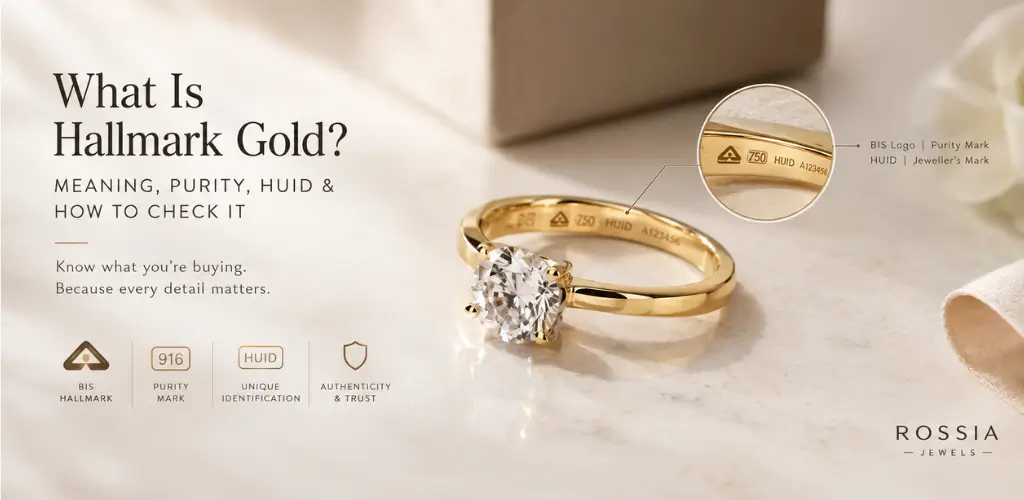
What Does the BIS Hallmark Mean?
Whether you choose 14KT or 18KT gold, always ensure your jewellery carries a BIS Hallmark.
The Bureau of Indian Standards (BIS) hallmark is the official certification of gold purity in India. It confirms that the jewellery has been independently tested and meets the stated purity standards.
Here are the common BIS hallmark codes:
|
Gold Purity |
BIS Hallmark |
|
24KT |
BIS 999 |
|
22KT |
BIS 916 |
|
18KT |
BIS 750 |
|
14KT |
BIS 585 |
When purchasing an engagement ring, look for:
- The BIS Hallmark
- The HUID (Hallmark Unique Identification) number
- The purity marking (750 or 585)
These markings provide confidence that you’re investing in genuine, certified gold.
At Rossia Jewels, every engagement ring is crafted using BIS-hallmarked 14KT or 18KT gold, ensuring complete transparency and trust.
Which Gold Is Better for Sensitive Skin?
If you have sensitive skin or a known metal allergy, gold purity becomes even more important.
Since 18KT gold contains a higher percentage of pure gold, it generally has fewer alloy metals that may irritate. This makes it the preferred option for people with metal sensitivities.
However, many modern jewellers-including Rossia Jewels-use carefully formulated, high-quality alloys designed for comfort and everyday wear. As a result, most people can comfortably wear either 14KT or 18KT gold without any issues.
If you’ve previously experienced reactions to jewellery, let your jeweller know before placing your order. They can recommend the most suitable metal for your needs.
Which Gold Colour Should You Choose?
The choice of gold colour is just as personal as the choice of purity.
Yellow Gold
Yellow gold remains the most timeless and traditional choice for engagement rings.
Choose 18KT yellow gold if you love a rich, luxurious golden hue. Opt for 14KT yellow gold if you prefer a slightly lighter, more contemporary appearance.
White Gold
White gold continues to be one of the most popular choices for modern engagement rings.
Its bright, reflective finish enhances the brilliance of both natural and lab-grown diamonds, making them appear even more radiant.
Since both 14KT and 18KT white gold are rhodium plated, the visual difference between them is minimal.
Rose Gold
Rose gold has gained immense popularity in recent years due to its warm, romantic appearance.
Whether you choose 14KT or 18KT, rose gold beautifully complements a wide range of diamond shapes, including oval, pear, cushion, emerald, and round-cut diamonds.
Which Gold Is Right for Your Lifestyle?
Still unsure whether to choose 14KT or 18KT?
Here’s a quick guide.
Choose 14KT Gold If You:
- Wear your engagement ring every day
- Have an active lifestyle
- Work with your hands regularly
- Want greater scratch resistance
- Prefer lower maintenance
- Are working within a budget
- Want to maximise your diamond budget
Choose 18KT Gold If You:
- Prefer higher gold purity
- Love the richer colour of yellow gold
- Have sensitive skin
- Are buying an heirloom-quality ring
- Don’t mind occasional polishing
- Value premium fine jewellery
Both options are excellent. The right choice depends on your priorities rather than one being objectively better than the other.
Why Choose Rossia Jewels for Custom Engagement Rings in Gurgaon?
At Rossia Jewels, we understand that choosing an engagement ring is a deeply personal experience. That’s why we don’t believe in one-size-fits-all recommendations.
Whether you’re comparing 14KT vs 18KT Gold for Engagement Rings, selecting a diamond shape, or deciding between natural and lab-grown diamonds, our experts guide you through every step with honest advice tailored to your preferences.
Here’s what sets Rossia Jewels apart:
- Custom-designed engagement rings crafted exclusively for you
- Over 1,200 engagement ring designs to inspire your perfect piece
- Natural and lab-grown diamonds certified by leading laboratories
- BIS-hallmarked 14KT and 18KT gold in yellow, white, and rose gold
- In-house manufacturing for exceptional quality and precision
- Personal design consultations with experienced jewellery experts
- Customisation of diamond shape, setting, band width, engraving, and finish
- Fast custom manufacturing, typically completed within 7–10 working days
- Lifetime Buyback and Exchange Policy for added peace of mind
Visit our Gurgaon Experience Centre to compare 14KT and 18KT rings side by side, explore different designs, and create a bespoke engagement ring that reflects your story. From the initial concept to the final handcrafted piece, our team works closely with you to bring your vision to life with exceptional craftsmanship and attention to detail.
Must Read: Personalised Engagement Rings in India: The Complete Guide to a Ring Made From Your Story
What Is the Final Verdict?
The debate around 14KT vs 18KT Gold for Engagement Rings isn’t about choosing the “better” metal-it’s about choosing the one that best suits your lifestyle, budget, and personal style.
If durability, practicality, and everyday wear are your priorities, 14KT gold is an excellent choice. If you value higher gold purity, a richer yellow hue, and a more luxurious feel, 18KT gold is equally rewarding.
Whichever option you choose, ensure your ring is crafted using BIS-hallmarked gold, features a high-quality certified diamond, and is made by a jeweller you trust.
At Rossia Jewels, we’re committed to helping you make that decision with confidence, creating engagement rings that are not only beautiful but designed to be treasured for a lifetime.
Frequently Asked Questions About 14KT vs 18KT Gold for Engagement Rings
1. Which is better: 14KT or 18KT Gold for Engagement Rings?
There isn’t a single “better” option. The right choice depends on your lifestyle and priorities. If you wear your engagement ring every day and want maximum durability, 14KT gold is often the better choice because it is harder and more resistant to scratches. If you prefer higher gold purity and a richer yellow gold colour, 18KT gold is an excellent option.
2. Is 14KT gold real gold?
Yes. 14KT gold is genuine gold that contains 58.3% pure gold mixed with strengthening alloys. It is widely used for engagement rings and fine jewellery across the world and is certified in India with the BIS 585 hallmark.
3. Why is 18KT gold more expensive than 14KT?
18KT gold contains 75% pure gold, while 14KT contains 58.3%. Since pure gold is more valuable than alloy metals, jewellery made in 18KT gold costs more. The final price difference depends on the gold rate, the weight of the ring, and its design.
4. Does 18KT gold scratch more easily?
Yes. Because 18KT gold has a higher percentage of pure gold, it is naturally softer than 14KT gold. It may develop fine scratches more quickly with everyday wear, but these can usually be removed through professional polishing.
5. Which gold is better for everyday wear?
For rings that are worn daily, 14KT gold is generally the more practical option. Its higher alloy content makes it more resistant to scratches, dents, and everyday wear while still offering the beauty of genuine gold.
6. Which gold looks better with diamonds?
Both 14KT and 18KT gold beautifully showcase diamonds. The brilliance of the diamond remains the same regardless of the gold purity. The difference lies in the colour of the band-18KT yellow gold has a richer appearance, while 14KT has a slightly lighter tone.
7. Is 18KT gold better for sensitive skin?
Generally, yes. Since 18KT gold contains more pure gold and fewer alloy metals, it may be a better choice for people with sensitive skin or certain metal allergies. If you have a known allergy, discuss it with your jeweller before choosing your metal.
8. Can I customise an engagement ring in both 14KT and 18KT gold?
Absolutely. At Rossia Jewels, every custom engagement ring can be crafted in 14KT or 18KT yellow, white, or rose gold. You can also personalise the diamond shape, setting style, band width, engraving, and finish to create a ring that reflects your style and story.
9. What BIS hallmark should I look for?
Always ensure your engagement ring carries a BIS Hallmark and HUID.
- BIS 585 = 14KT Gold
- BIS 750 = 18KT Gold
These hallmarks certify the purity of the gold and provide confidence that you’re purchasing genuine jewellery.
10. Is 22KT gold suitable for engagement rings?
No. Although 22KT gold is popular for traditional Indian jewellery, it is too soft for securely holding diamonds. Engagement rings are typically crafted in 14KT or 18KT gold, as these alloys provide the strength needed for long-term wear.
11. Which gold should I choose for a lab-grown diamond engagement ring?
Both 14KT and 18KT gold pair beautifully with lab-grown diamonds. If durability and value are your priorities, 14KT is an excellent option. If you prefer higher gold purity and a richer appearance, 18KT gold is equally suitable.
12. Where can I buy custom engagement rings in Gurgaon?
If you’re looking for handcrafted custom engagement rings in Gurgaon, Rossia Jewels offers personalised design consultations, BIS-hallmarked 14KT and 18KT gold, certified natural and lab-grown diamonds, and complete customisation. From selecting the diamond to finalising the setting, every ring is crafted in-house to match your vision.
Final Thoughts
Choosing between 14KT vs 18KT Gold for Engagement Rings is about finding the right balance between durability, appearance, budget, and personal preference. Both options are genuine, BIS-hallmarked gold and are trusted by jewellers worldwide for crafting beautiful engagement rings.
If you lead an active lifestyle and want a ring that can comfortably withstand everyday wear, 14KT gold offers excellent durability and value. If you appreciate higher gold purity, a richer yellow gold tone, and a premium feel, 18KT gold remains a timeless and elegant choice.
The most important decision isn’t simply the purity of the gold-it’s choosing a ring that reflects your personality, celebrates your relationship, and is crafted to last for generations.
Design Your Dream Engagement Ring with Rossia Jewels
At Rossia Jewels, we believe every love story deserves a ring that’s just as unique.
Whether you’ve already chosen your diamond or are just beginning your journey, our jewellery experts will help you compare 14KT vs 18KT Gold for Engagement Rings, understand the advantages of each, and create a ring that’s tailored to your lifestyle and budget.
Every engagement ring is handcrafted in-house using BIS-hallmarked 14KT or 18KT gold, paired with carefully selected certified natural or lab-grown diamonds. From choosing the perfect diamond shape and setting to adding meaningful engravings and personalised design details, we involve you in every stage of the creation process.
Visit our Gurgaon Experience Centre or book a personalised consultation online to explore our collection of handcrafted engagement rings and create a piece that’s truly yours.
Your engagement ring is more than jewellery-it’s a symbol of your story. Let’s create one you’ll cherish for a lifetime.