Blog
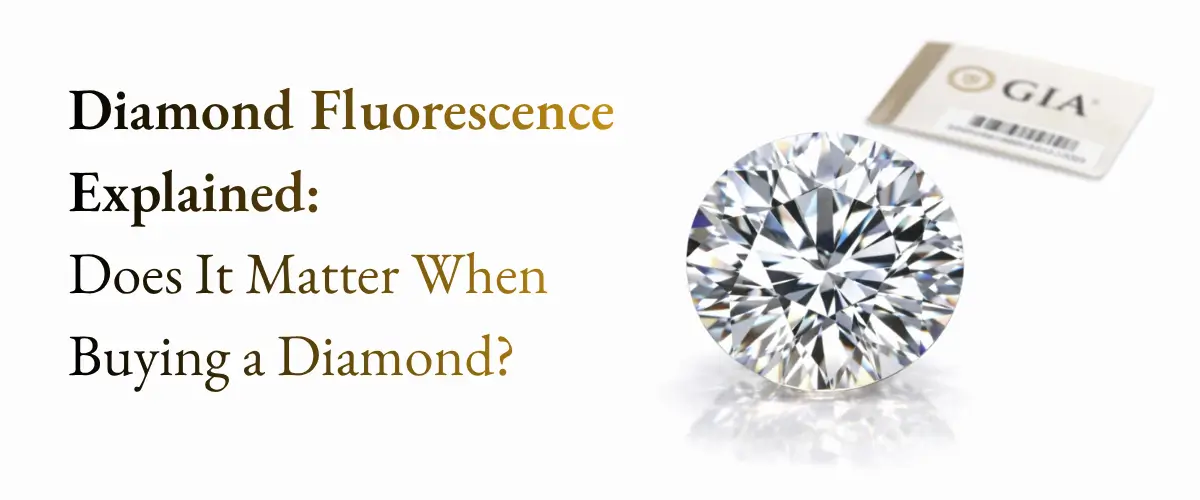
Diamond Fluorescence Explained: Does It Matter When Buying a Diamond?
Most people buying a diamond focus on the Four Cs-cut, colour, clarity, and carat. However, diamond fluorescence is another characteristic that can influence both the appearance and value of a diamond. While it isn’t one of the official grading factors, understanding diamond fluorescence can help you avoid common misconceptions and even find better value.
Some buyers worry that fluorescence is a flaw, while others actively look for it to save money. The truth lies somewhere in between. In this guide, we’ll explain what diamond fluorescence is, how it affects different diamonds, when it matters, and how to use it to make a smarter purchase.
What Is Diamond Fluorescence?
Diamond fluorescence is the tendency of a diamond to emit a visible glow when exposed to ultraviolet (UV) light. In most cases, this glow is blue, although some diamonds may display yellow, white, or orange fluorescence.
The phenomenon occurs because of natural structural irregularities within the diamond’s crystal lattice. These microscopic defects absorb ultraviolet light and re-emit it as visible light.
One important thing to remember is that diamond fluorescence is rarely visible under normal indoor lighting. It is usually only noticeable under UV-rich environments such as black lights, certain nightclub lighting, or direct sunlight with high UV exposure.
Both the IGI and GIA grade fluorescence using five categories:
- None
- Faint
- Medium
- Strong
- Very Strong
These grades appear on every certified diamond report.
Why Do Some Diamonds Show Fluorescence?
Not every diamond exhibits fluorescence. Scientists believe the effect is caused by trace elements such as nitrogen or other structural characteristics formed during the diamond’s growth.
Natural diamonds formed over billions of years can develop fluorescence, and some lab grown diamonds also display it depending on how they were created.
Since diamond fluorescence forms naturally within the crystal structure, it should not be confused with a treatment or enhancement. It is simply another identifying characteristic of the stone.
How Common Is Diamond Fluorescence?
Approximately 25–35% of diamonds display some level of fluorescence.
Among these:
- Most have Faint or Medium fluorescence.
- Strong and Very Strong fluorescence are considerably less common.
The pattern differs slightly in lab grown diamonds.
Most CVD (Chemical Vapour Deposition) lab grown diamonds-the type commonly used in fine jewellery-typically have None or Faint fluorescence. Diamonds created using the HPHT (High Pressure High Temperature) process may show a wider range of fluorescence levels.
This means diamond fluorescence is generally less of a consideration when purchasing most modern CVD lab grown diamonds.
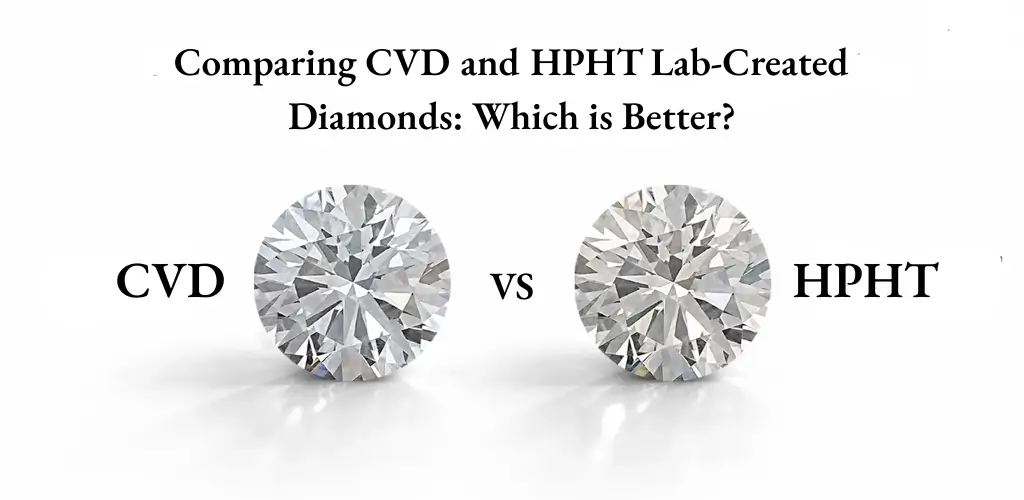
Must Read: Comparing CVD and HPHT Lab-Created Diamonds: Which is Better?
Does Diamond Fluorescence Make a Diamond Look Better?
Surprisingly, yes-in certain situations.
Diamonds in the J, K, and L colour grades often have a slight yellow tint. Blue diamond fluorescence can help offset this warmth when viewed in daylight, making the diamond appear slightly whiter.
Because of this effect, many experienced buyers intentionally purchase lower-colour diamonds with Strong fluorescence to achieve a brighter appearance without paying for a higher colour grade.
For budget-conscious buyers, this can represent excellent value.
Can Diamond Fluorescence Make a Diamond Look Worse?
Occasionally-but only under specific conditions.
For diamonds in the D, E, and F colour grades, Strong or Very Strong fluorescence may sometimes create a slightly hazy, oily, or milky appearance under intense UV light.
It’s important to note that this doesn’t happen with every fluorescent diamond.
Many colourless diamonds with Strong fluorescence remain perfectly transparent and beautiful. However, because the possibility exists, the market generally values these diamonds slightly lower than similar stones without fluorescence.
Fortunately, under normal indoor lighting, restaurants, offices, shopping malls, and most everyday environments, diamond fluorescence usually has no visible impact whatsoever.
Does Diamond Fluorescence Affect Diamond Prices?
Yes-and often more than it affects appearance.
Because many buyers misunderstand fluorescence, diamonds with Strong fluorescence often sell at lower prices.
Typical market trends include:
|
Diamond Colour |
Price Impact of Strong Fluorescence |
|
D–F |
Approximately 10–15% lower |
|
G–H |
Approximately 3–8% lower |
|
I–J |
Often neutral or slightly higher due to whitening effect |
For many buyers, this creates an opportunity.
A G or H colour diamond with Faint or Medium diamond fluorescence may look virtually identical to a non-fluorescent diamond while costing less.
This is why experienced jewellers often evaluate fluorescence together with colour—not as an isolated grading factor.
How Do IGI and GIA Grade Diamond Fluorescence?
Both IGI and GIA include fluorescence on every grading report.
When reviewing your certificate, you’ll generally see one of these grades:
- None – No fluorescence detected.
- Faint – Extremely minimal fluorescence with virtually no visible effect.
- Medium – Usually safe across most colour grades.
- Strong – Worth evaluating alongside the colour grade.
- Very Strong – Best viewed in person before purchasing, particularly in colourless diamonds.
Rather than focusing only on the fluorescence grade, always consider how it interacts with the diamond’s colour and overall appearance.
Should You Buy a Diamond With Strong Fluorescence?
The answer depends on the colour grade.
If you’re buying a:
D-F Colour Diamond
Ask to see the actual stone in different lighting conditions before purchasing. While many look perfectly normal, a small percentage may appear slightly hazy under UV-rich light.
G-H Colour Diamond
Strong fluorescence is often not a major concern and may even represent good value if the diamond appears clear.
I-L Colour Diamond
Strong blue fluorescence can actually enhance the diamond’s apparent whiteness, making it an attractive buying option.
Rather than automatically avoiding diamond fluorescence, evaluate the complete diamond.
Is Diamond Fluorescence Different in Lab Grown Diamonds?
Yes.
Most CVD lab grown diamonds exhibit None or Faint fluorescence, making the issue less significant for buyers.
HPHT-grown diamonds may display stronger fluorescence depending on how they were produced.
At Rossia Jewels, every lab grown diamond is independently certified by IGI, including its fluorescence grade. This allows customers to compare diamonds confidently and understand exactly what they are purchasing. Shop lab grown diamond engagement rings.
Compare natural vs lab grown diamonds.
How Can You Check Diamond Fluorescence Before Buying?
Before finalising your purchase:
- Review the fluorescence grade on the IGI or GIA certificate.
- Compare the diamond under different lighting conditions whenever possible.
- Consider the colour grade alongside the fluorescence grade.
- Don’t reject a diamond solely because it has fluorescence.
- Buy from a jeweller who explains every grading characteristic transparently.
A reputable jeweller should help you understand whether the fluorescence has any practical effect on that specific diamond rather than relying on general assumptions.
Read Our Guide on The Ultimate Insider Guide to Reading an IGI Certificate Like a Pro
Expert Tip from Rossia Jewels
At Rossia Jewels, we’ve helped countless customers compare fluorescent and non-fluorescent diamonds side by side.
One thing we’ve consistently found is that diamond fluorescence is often misunderstood. In most everyday situations, buyers cannot distinguish between a diamond with Faint fluorescence and one with no fluorescence at all.
Instead of relying solely on a certificate, we encourage customers to view diamonds under different lighting conditions and compare them in person. This ensures you choose a diamond based on its overall beauty rather than one specification.
Whether you’re purchasing a classic solitaire or designing a custom engagement ring in Gurgaon, our experts explain every aspect of diamond quality-including cut, colour, clarity, carat, and fluorescence-so you can make an informed decision with confidence.

Frequently Asked Questions About Diamond Fluorescence
Does diamond fluorescence make a diamond cloudy?
Not usually. Only a small number of diamonds with Strong or Very Strong fluorescence may appear slightly hazy under intense UV light. Most fluorescent diamonds look perfectly clear in everyday conditions.
Is diamond fluorescence good or bad?
Neither. Diamond fluorescence can be beneficial in lower-colour diamonds while having little or no effect on many other diamonds. It should always be evaluated alongside colour grade.
Should I avoid Strong diamond fluorescence?
Not automatically. Strong fluorescence may improve the appearance of lower-colour diamonds. For colourless diamonds, it’s worth viewing the stone before making a decision.
Do lab grown diamonds have diamond fluorescence?
Yes. Some lab grown diamonds display fluorescence, although most CVD-grown diamonds show None or Faint fluorescence.
Is diamond fluorescence included on an IGI certificate?
Yes. Both IGI and GIA grading reports clearly state the fluorescence grade, helping buyers compare certified diamonds accurately.
Final Thoughts
Understanding diamond fluorescence allows you to shop with greater confidence rather than relying on outdated myths. In many cases, fluorescence has little or no visible impact on a diamond’s beauty, yet it can influence its market price significantly.
The smartest approach is to evaluate the complete diamond-not just a single grading characteristic. By considering fluorescence together with cut, colour, clarity, and carat, you’ll make a more informed investment.
If you’re looking for expert guidance, Rossia Jewels offers personalised consultations for both natural and lab grown diamonds. Whether you’re selecting a ready-made solitaire or creating a custom engagement ring in Gurgaon, our experienced team helps you compare certified diamonds transparently so you can choose a piece you’ll cherish for a lifetime.