Blog
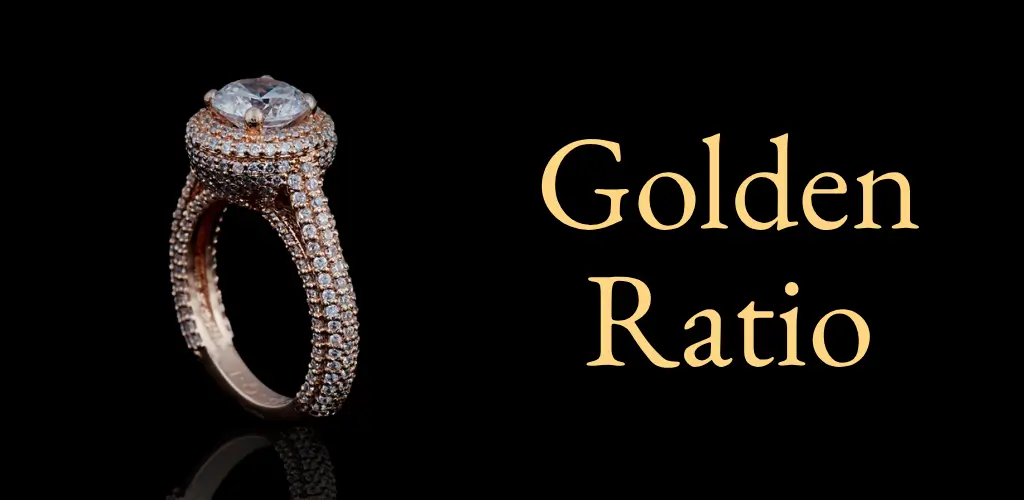
Golden Ratio: Choosing The Right Width Of The Band For The Perfect Lab-Grown Engagement Ring
When most people shop for a lab-grown engagement ring, they spend 90% of their time staring at the diamond. While the “4Cs” are vital, as a designer at Rossia Jewels, I look at the architecture of the entire piece. The band isn’t just a placeholder for the stone; it is the frame that determines how large the diamond appears and how long the ring will last.
In the design world, the Golden Ratio (phi ~ 1.618) is a mathematical proportion found in nature that the human eye perceives as “perfect”. When applied to jewelry, this ratio helps us balance the width of the band with the carat weight of the stone.
Here is how to use design principles to choose the perfect band width for your ring.
1. The "Invisible" Band (1.5mm – 1.8mm)
The "dainty" look is incredibly popular in trend today, especially for minimalist lab-grown solitaires.
- The Aesthetic: A thinner band creates an optical illusion. By minimizing the "frame," the center stone appears significantly larger than it actually is.
- The Golden Ratio Tip: If you have a 1-carat lab-grown diamond, a 1.5mm band creates a high-contrast ratio that makes the stone "pop."
- The design perspective: While beautiful, ultra-thin bands require high-quality 14KT gold for structural integrity. At Rossia Jewels, we ensure these slender designs are engineered to be scratch-resistant and durable for daily wear.
2. The Classic Standard (2.0mm – 2.2mm)
This is the "Goldilocks" of band widths. It offers the perfect balance between elegance and security.
- The Aesthetic: It feels substantial on the finger without looking "bulky." It is the most timeless choice for round brilliant or cushion-cut stones.
- The Golden Ratio Tip: This width works harmoniously with stones ranging from 1.2ct to 2.0ct. It mimics the proportions often found in classical architecture - sturdy yet refined.
- The Practicality: A 2.0mm band provides more surface area for custom engravings or hidden details inside the shank.
3. The Statement Band (2.5mm and Above)
Wider bands are making a massive comeback, particularly in vintage-inspired and "Gender-Neutral" designs.
- The Aesthetic: It conveys a sense of power and permanence. Wider bands are ideal for Emerald or Asscher cuts, where the geometric lines of the stone benefit from a stronger frame.
- The design perspective: A wider band is a canvas. It allows us to play with matte finishes, hammered textures, or pavé diamond rows that would be impossible on a thinner wire.
- The Comfort Factor: Ensure you choose a "Comfort-Fit" (domed interior) for wider bands, as they cover more skin and can feel tighter than slender rings.
The Designer’s Rule of Thumb
When choosing your width, consider your finger proportion
- Short Fingers: Lean toward thinner bands (1.5mm–1.8mm) to create an elongating effect.
- Long Fingers: You have the "real estate" to carry wider, more experimental bands (2.2mm+) without the ring looking overwhelming.
- Active Lifestyles: If you work with your hands, the "Golden Ratio" favors durability. A slightly wider 2.0mm band in 14KT gold is the professional recommendation for long-term wear.
Why the "Maker" Matters
Because Rossia Jewels is a direct manufacturer, we don't just "sell" you a band width. We can adjust the thickness and height of any of our 1,200+ designs to match your hand's specific proportions. We believe that a ring should be a balanced masterpiece, whether you're choosing a lab-grown solitaire or a custom natural diamond heirloom. Here is how we help you with a perfect lab-grown diamond engagement ring

The Rossia Proportion Guide: Balancing Brilliance & Band
Use this table as a starting point to find your perfect "Golden Ratio." Remember, as a direct manufacturer, Rossia Jewels can customize any of these measurements to your exact preference.
Carat Weight |
Approx. Stone Diameter |
"The Dainty Look" (1.5mm – 1.8mm) |
"The Classic Look" (1.9mm – 2.2mm) |
"The Statement Look" (2.3mm – 2.8mm) |
|---|---|---|---|---|
|
0.50 Carat |
~5.0 mm |
Maximizes the stone; creates a delicate, airy feel. |
Offers a balanced, sturdy traditional appearance. |
Feels bold and substantial; prioritizes the metal. |
|
0.75 Carat |
~5.7 mm |
Creates a high contrast that makes the stone pop. |
The standard "Goldilocks" ratio for most hands. |
A modern, high-fashion aesthetic. |
|
1.00 Carat |
~6.4 mm |
The "Red Carpet" look; the stone appears massive. |
Our most requested pairing for 14KT & 18KT gold. |
A powerful, architectural frame for the diamond. |
|
1.50 Carat |
~7.3 mm |
Ultra-sleek; emphasizes the premium clarity of the stone. |
Provides excellent structural security and balance. |
Ideal for vintage-inspired or "Gender-Neutral" styles. |
|
2.00 Carat |
~8.1 mm |
Recommended in 14KT gold only for structural stiffness. |
The perfect symmetry for a "Life-Long" heirloom. |
A commanding presence that feels incredibly secure. |
Three Pro-Tips from the Rossia Workshop:
- The Durability Rule: If you are choosing a band in the "Dainty" range (1.5mm – 1.8mm), we professionally recommend 14KT gold. Its higher alloy content provides the necessary "stiffness" to ensure the band doesn't warp or bend under daily pressure.
- The Finger Illusion: If you have petite fingers, a 1.6mm band will often look like a "Classic" width on you. If you have larger hands, that same 1.6mm band may look "Ultra-Thin." This is why our consultative approach includes looking at your hand's unique proportions.
- The Tapered Trick: Can't decide? Many of our 1,200+ designs feature a Tapered Band - wider at the bottom for durability and narrower near the stone to maximize the diamond's visual size.
Ready to find your perfect proportion? Explore our curated collection of Lab-Grown Engagement Rings where every piece is meticulously handcrafted to balance the optics, ensuring your center stone achieves its maximum visual impact without compromising on structural elegance.
Frequently Asked Questions: The Golden Ratio & Band Design
Answer: In jewelry design, the Golden Ratio (phi ~ 1.618) is used to create a perfect visual balance between the center stone’s diameter and the band’s width. When this ratio is applied, the ring feels "right" to the eye - the band is substantial enough to support the stone without being so thick that it makes the diamond look smaller.
Answer: Yes. This is a classic optical illusion. By reducing the "frame" (the band) around the diamond, you increase the visual contrast. A dainty 1.5mm–1.8mm band minimizes the gold's footprint, allowing a 1-carat diamond to appear significantly more prominent than it would on a 2.5mm band.
Answer: While 1.5mm is the threshold for a "thin" ring, its durability depends on the craftsmanship. At Rossia Jewels, we recommend 14KT gold for these designs because its higher alloy content provides the structural stiffness needed to prevent bending. We also ensure the band has sufficient "depth" (thickness) to maintain its shape over decades of wear.
Answer: As a general rule, shorter fingers benefit from thinner bands (under 2.0mm) as they create an elongating effect. Longer or larger fingers can carry wider "Statement Bands" (2.2mm and above) without the ring looking overwhelming. During our consultative sessions, we help you find the width that complements your hand's unique proportions.
Answer: Absolutely. One of the biggest advantages of buying from a direct manufacturer is flexibility. While traditional retailers only sell what is in stock, we can adjust the band width of any of our 1,200+ designs to your exact preference—whether you want to go thinner for a "larger" stone look or wider for a vintage feel.
Answer: Slightly. A wider band uses more gold weight, which will increase the price of the setting. However, because we operate on a manufacturer-direct model, even our wider, high-purity 18KT gold bands are priced significantly lower than traditional retail alternatives.
Answer: Not if the "head" (the part holding the diamond) is engineered correctly. At Rossia, we focus on sleek yet secure architecture. We often use a slightly reinforced base where the band meets the prongs to ensure that even a dainty band provides a "Forever Secure" home for your lab-grown or natural diamond.